Hair
Best Hairstyles for Florida Heat and Humidity
Last updated:
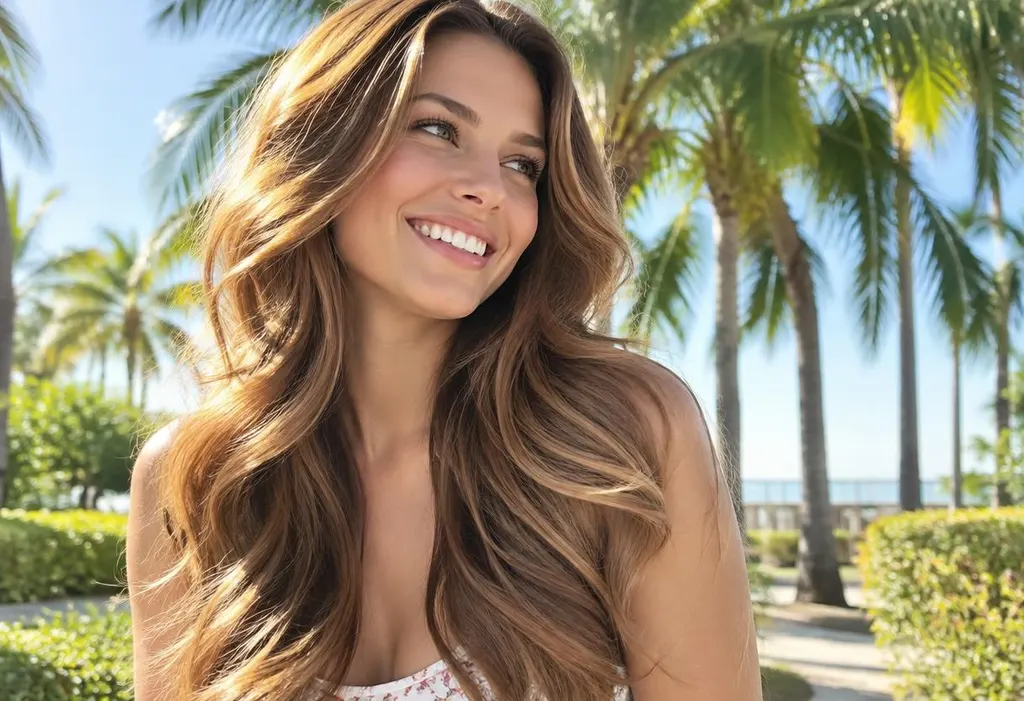
The best Florida hairstyle is one that stays comfortable and looks intentional as the weather changes. Humidity, perspiration, rain, and time outdoors affect different textures differently. Instead of chasing a humidity-proof promise, compare loose texture, braids, updos, and smooth finishes against your routine, hair condition, and willingness to restyle.
Why does Florida weather change a hairstyle?
Moisture in the air can alter the way hair holds a temporary shape, particularly when that shape differs from its natural pattern. Perspiration adds moisture near the scalp, while wind and clothing create friction through the lengths. A style that looks smooth indoors may expand, flatten, or regain curl outside. That response does not mean your hair is unhealthy.
Start by describing a normal day: a short walk from the car, an outdoor shift, exercise, or a long evening event. Those situations call for different compromises. Decide whether your priority is keeping hair off the neck, reducing morning styling, preserving visible curl, or maintaining a polished silhouette. No single style solves all four equally well.
When are braids a useful option?
Braids can keep sections organized and reduce how often loose hair needs rearranging during a hot day. They may suit exercise, commuting, and active routines, depending on the pattern and how the scalp feels. Discuss your own length, density, and hairline rather than assuming the tightest or smallest braid will be the most practical.
For a braids consultation, ask about comfortable tension, extension weight if relevant, cleansing, drying, and removal. Braids are not automatically protective if they pull or stay neglected. Avoid styles that require painful installation to look neat. A little softness around the hairline is a better compromise than discomfort, broken hairs, or repeated stress on fragile edges.
Which updos are comfortable in hot weather?
A low bun, softly pinned twist, or textured updo can lift hair from the neck without requiring a severe, slicked-back finish. These shapes can be useful for weddings, work, and dinners because the structure relies on placement rather than every loose strand staying perfectly straight. The best version depends on your length, density, and preferred amount of volume.
Compare updos with your usual loose style and ask where the weight will sit. Very high placement, heavy accessories, or too many tightly anchored sections can become uncomfortable over several hours. Test sitting against a chair and moving your head. For an outdoor event, a few soft pieces should be an intentional choice, not something you must keep flattening all evening.
Can a smooth blowout work in humid conditions?
A smooth blowout can work for someone who wants movement and expects limited exposure to moisture. It is a temporary finish, not a weather barrier. Natural texture, recent processing, perspiration, and the amount of time outdoors all influence how long the shape remains recognizable. Ask what degree of reversion is realistic for your hair.
Discuss a Dominican blowout if a smooth, full finish matches your goal, while being clear about exercise and outdoor plans. Do not choose it simply because you expect straight hair to require no maintenance. Repeatedly reheating roots after they become damp can add damage without solving the underlying weather exposure. A planned textured backup may be more practical.
How do natural texture and half-up styles compare?
Working with your existing wave or curl often reduces the amount of daily reshaping needed. The goal can be defined texture with controlled sections rather than a finish that never expands. Ask about conditioning and product weight for your density. Too much rich product may flatten finer hair, while too little conditioning can leave other hair difficult to detangle.
A half-up style offers a middle ground: the face stays clearer while the lower lengths remain visible. It is useful when you enjoy wearing hair down but dislike strands sticking around the cheeks. Remember that the loose portion still meets humidity and friction. Use gentle fastenings and avoid repeatedly tightening the same small section throughout the day.
How can you compare options before an appointment?
Use a simple comparison based on your real routine. Braids organize sections but require scalp care and careful removal. Updos lift hair from the neck but depend on comfortable support. Loose natural texture allows movement but may expand. A blowout changes the temporary shape but can revert with moisture. Choose the trade-off you can maintain rather than the most polished reference photograph.
Tell the stylist where previous styles failed: roots swelled after walking outside, pins hurt after an hour, or the nape tangled during exercise. Specific observations help more than saying your hair never behaves. Bring an ordinary-day photograph as well as inspiration. Ask what you should do on the second day, not only how the finished style looks at the appointment.
- Match the style to outdoor time and exercise.
- Describe hairline sensitivity and previous breakage.
- Ask about cleansing, drying, and safe removal.
- Choose a backup for rain or unexpected perspiration.
What do dermatologists recommend about tension and heat?
The American Academy of Dermatology explains that repeated pulling from tight braids, buns, ponytails, and extensions can lead to traction alopecia. Ask for the style to be loosened if it hurts, and avoid repeatedly stressing the same areas. Persistent thinning, breakage near the hairline, or scalp symptoms deserve a dermatologist’s assessment rather than a tighter covering style.
AAD styling guidance recommends limiting heat and using flat irons on dry hair at low or medium settings. Heat protection does not make excessive heat harmless. Avoid touching up damp roots with an iron and repeatedly passing over the same sections. Discuss a lower-heat routine if maintaining the chosen finish requires constant hot-tool work.
How should you prepare for a Lake Worth Beach appointment?
Bring photographs of your hair in its everyday state and describe your washing schedule, outdoor exposure, and styling tools. Mention color, straightening, extensions, and any scalp discomfort. Ask for preparation instructions and a realistic maintenance plan before deciding. The strongest recommendation is the one that suits both your preferences and the condition of your hair.
El Encanto Beauty Salon & Spa is at 4100 10th Ave N, Suite 4116, Lake Worth Beach, FL 33461. Call (561) 312-2203. Hours: Mon–Sat 9:00 AM–6:00 PM; Sunday closed. Confirm the appointment details directly; these hours do not establish event-day availability or off-site service.
What else should you know?
Is any hairstyle completely humidity-proof?
No hairstyle is guaranteed to ignore moisture, perspiration, and rain. Choose a shape that remains manageable as it changes and plan a simple backup.
Are tight braids better for Florida weather?
Not necessarily. Tightness can cause discomfort and repeated tension can damage the hairline. Ask for a comfortable pattern and appropriate care instructions.
Should I straighten my hair again after sweating?
Avoid ironing damp hair or repeatedly reheating the same roots. Let hair dry and consider a gentle pinned or textured alternative instead.
Can I wear my curls loose in summer?
Yes. Work with your natural pattern and discuss conditioning, product weight, and realistic expansion. A half-up option can keep the face clearer.
What is a simple backup for sudden rain?
Carry an umbrella and a gentle fastening suited to your hair. A loose bun or pinned section may be easier than trying to recreate a smooth finish outdoors.
Which treatments can you explore?
Ready to book hair services?
El Encanto Beauty Salon & Spa is in Lake Worth Beach, open Monday to Saturday, 9:00 AM to 6:00 PM.